EXTRA CREDIT !!
QUIZ:
Marxist Media Analysis
1) Marx was a humanist, whose argument was essentially a _____________ one.
2) Does the ruling class believe it's own messages? Yes or No.
3) The owners and workers in Marxist analysis are referred to as the _______ & _______.
4) Name one of the myths perpetuated by advertising __________.
5) What does a postmodernist believe?
EXTRA CREDIT QUIZ:
Marxist Media Analysis
1) Marx was a humanist, whose argument was essentially a _moral___ one.
2) Does the ruling class believe it's own messages? Yes or No.
3) The owners and workers in Marxist analysis are referred to as the _bourgeoisie_ & _proletariat______.
4) Name one of the myths perpetuated by advertising _self-made man, individualism, illusion of choice____.
5) What does a postmodernist believe? That there is no right and wrong.
--
Target Groups
Men/Women
Americans/ "Other People"
Young/Old
Rich/Poor
Educated/Uneducated
Sexual Orientation
What programming has the broadest appeal across demographics?


The Olympics are a fantastic time to analyze Mainstream media messages as they are as mainstream as it gets. What did we see?
Racism in Olympic Coverage
What racist stories were there in the olympics?
Gabby Douglas’ hair, female Chinese athletes as stoic automatons, ‘plastic Britons,’ and advertisements featuring monkeys on gymnastic apparatus—if one thing has characterised media coverage of the 2012 Summer Olympics, it’s rampant racism. While the Olympics are ostensibly an event that brings the world together, the racism that runs through much of the coverage serves to underscore the differences between ‘us’ and ‘them,’ whether commentators are making snide references to African runners or focusing on white, glossy female athletes to the exclusion of the women of colour on their teams. A white-dominated media dictates the tone of coverage of an event held in the capital of a major Western power, and a power that has been struggling with racial tensions of its own in recent years, thanks to the rise of organisations like the EDL.
Viewers of colour interested in following the London Olympics are forced to wade through racist commentary to track their favourite athletes and events. Every move of athletes of colour is carefully scrutinised and found wanting, from cries that a celebratory dance is ‘unsportsmanlike’ to sharp comments about personal appearance. And when fans of colour dare to discuss the racialised nature of Olympics coverage, they’re told to ‘stop bringing race into it.’
There’s a firm belief in the minds of white arbiters that we live in a post-racial society and that a ‘colorblind’ approach is the best approach to racial equality. As the Olympic coverage, which forces people to grit their teeth through racism on a daily basis, illustrates, racism is alive and thriving, and ignoring it does not, in fact, make it go away. Such a high profile event provides an important opportunity for discussing the impact of racism in the media, but many whites appear reluctant to engage with the conversation.
Perhaps the most noted instance of sustained racism in media coverage has surrounded US gymnast Gabby Douglas, who earned herself a spot in history by leading her team to victory and taking individual all-round gold. Yet, she was almost entirely absent from coverage of the US gymnastics team until she became an inescapable champion with her individual gold, and even then, the US media took time to comment on her hair, slam her mother for giving her all to get Gabby to the Olympics, and imply that her military father had abandoned his family while he was actually fulfilling the terms of his service.
As if that wasn’t enough, US network NBC felt it necessary to air an advertisement for its new show Animal Practice featuring a monkey on a set of gymnastics rings sandwiched right in the middle of its Douglas coverage. Evidently no one on the ad development team thought there might be a problem with running an ad with heavy racial overtones in the midst of overall Olympics coverage, where scores of Black athletes represent nations from all over the world, let alone with airing it literally seconds after showing Douglas’ face.
Commentators on NBC as well as other networks have made scores of racial and cultural gaffes over the course of the Olympics, from confusing the location of various nations—poor Australia and Austria were confused yet again—to getting the names of athletes wrong. They also indulged themselves in a number of blatantly racist comments about athletes; union organiser Julia Wong, for example, pointed out that ‘Next time a commentator goes on about how stoic & unfeeling the Chinese are I’m going to lose it.’
In the world of NBC commentators, female Chinese athletes are robots, unemotional and focused utterly on winning at all costs. And, of course, many couldn’t resist the opportunity to incorporate a Mao reference or a joke about China’s controversial family planning policies. The sheer level of Orientalism and xenophobia present in Western coverage of Chinese and other Asian athletes speaks to deeper undertones and a long history of anti-Asian racism in the US. Commentators apparently missed the memo on a spirit of cooperation.
Meanwhile, in Britain, The Daily Mail as well as other conservative platforms are crying foul about ‘plastic Britons,’ athletes competing under the British flag despite coming from other nations. The practice of competing under different flags is extremely common, yet racist agitators in Britain have turned it into evidence that Britain is being overrun with terrifying infiltrators; notably, of course, the ‘plastic Briton’ scandal focuses on athletes of colour, many of whom are leading team GB to victory, which should be satisfying the nationalistic sentiments of these aggressive hatemongers.
The manufactured uproar over ‘plastic Britons’ is reflective of a larger turn towards the far right in Britain as well as Europe in general, and a growing backlash against immigrants. Athletes who have lived and worked in Britain for decades are being challenged on the grounds that they are ‘not British enough,’ and it is not coincidental that they are athletes of colour; no matter how much they contribute to society, including upping Britain’s medal count, they won’t satisfy members of the right who would prefer to see a uniformly white Britain.
To say nothing of the two athletes suspended for racist Tweets, indicative of a deeper culture of racism among the athletes themselves, not just the media commenting on the Games. Organisers were ill-equipped to handle the onslaught of social media with this year’s games, and one can hope they are thinking ahead to 2016, when social media activity will undoubtedly be even higher, and even more of the general public will be engaged on social networks.
Many athletes have been using their Twitter accounts to great effect to reach out to fans, advocate for their sports, and support team members. Others have apparently chosen to use them for personal political platforms, spurring the hasty creation of a social media policy; evidently athletes needed to be specifically told that they should keep their racist thoughts to themselves rather than broadcasting them to the Internet at large.
But really, who can blame them for assuming it would be okay? After all, the sports commentators covering the Olympics certainly don’t feel any need to curb their blatant racism in the spirit of international cooperation.
What do announcers call this guy?
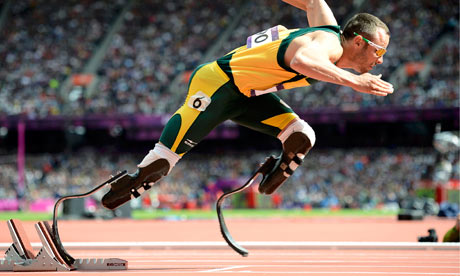
How about her?

During the women's road race on Sunday, commentators continually referred to the competitors as "girls," despite the fact that the top finishers for the U.S. were Shelley Olds, 32, Evelyn Stevens, 28 (a former [Lehman] Brothers associate) and Kristin Armstrong, 39 -- competing in her third Olympics. That adult women, at the top of their craft, with full lives and countless accomplishments continue to be referred to as "girls" in sports coverage is minimizing, to say the least.But it's not just media makers who are guilty of denigrating women athletes. As Jezebel notes, some Olympic viewers have taken to twitter to disparage the hair of Gabby Douglas -- who just made history by being the first black woman to win individual Olympic gold in gymnastics -- with comments like until she "gets her hair done," she "shouldn't be the standout in those [women's gymnastics] commercials." Right. Because it's the hair, not the two gold medals at 16.In perhaps the creepiest Olympic sexism, London Mayor Boris Johnson wrote in an editorial earlier in the week that the popularity of women's beach volleyball at the Olympics could be attributed to the "semi-naked women" who were "glistening like wet otters." Wet otters?
Who is the AIBA?
Although a formal decision has not been handed down, Wu said that will come in the next few weeks, along with a press release outlining guidelines for skirt lengths and technical requirements, should a country choose to adopt new uniforms. "Then national federations can design the skirts by themselves," he said.
The buzz began at the 2010 world championships, when AIBA presented competitors with skirts instead of the usual shorts associated with the sport and asked the women to wear them as a trial.
"I have heard people say, 'We can't tell the difference between the men and the women,' especially on TV, since they are in the same uniforms and wearing headgear," Wu told the Times Union of Albany, N.Y., in September 2010, shortly before those world championships. Saturday, he said he still hears similar comments, including complaints that the baggy shorts look sloppy on women. But at the AIBA commissions meeting in Bangkok last month, he also heard discontent from several national federations that feared the prospect of their female boxers being forced to wear skirts.

Olympic weightlifter Zoe Smith set a British women’s record in the clean-and-jerk on Monday — but that may have only been the eighteen-year-old’s second most impressive victory of July.
Earlier in the month, Smith and her women’s weightlifting teammates were the subject of a BBC documentary about their journey to the Olympics. When the group searched Twitter to see how people were responding to the program, they were flattered to see a deluge of complimentary tweets.
But a smaller group of male trolls used
the social network to denigrate their
appearance and, in so many words, call
them manly lesbians unfit for visual
consumption.
So Smith took to her blog to lay the smackdown.
“The obvious choice of slander when talking about female weightlifting is ‘how unfeminine, girls shouldn’t be strong or have muscles, this is wrong’. And maybe they’re right… in the Victorian era,” Smith wrote in a July 23 post.
She continued:
“This may be shocking to you, but we actually would rather be attractive to people who aren’t closed-minded and ignorant. Crazy, eh?! We, as any women with an ounce of self-confidence would, prefer our men to be confident enough in themselves to not feel emasculated by the fact that we aren’t weak and feeble.“And here’s some food for thought – maybe you should broaden your criteria for what you consider ‘attractive’ anyway, because these perfect, feminine women you speak of probably have no interest in you either.”
Then, after her record setting performance Monday, Smith used the press to tell the trolls her historic lift was “two fingers up” in their direction.

--

North Korea's Key to Olympic Medals: Refrigerators For Winners, Labor Camp Threat for Losers
By JOOHEE CHO | ABC News – Fri, Aug 3, 2012
Enlarge Photo
ABC News - North Korea's Key to Olympic Medals: Refrigerators For Winners, Labor Camp Threat for Losers (ABC News)
North Korea's Olympic athletes are thrilling their countrymen with surprising success in winning medals and they are attributing their success to their Dear Leader Kim Jong Un.
But others, including former North Korean athletes who have defected, suggest the success of the country's small contingent of athletes at the games may be the result of a policy of training them from a very young age at specialized schools, backed up by rewards like cars and refrigerators for winners and the threat of labor camps for losers.
North Korea has dramatically increased the amount of Olympic coverage that it's allowing its citizens to view, based on the superlative performance of the nation's team, according to a North Korean press official cited by Singapore's Asia One.
The communist nation went from showing only 15 minutes of Olympics on television a day to broadcasting five hours. The move comes in response to their team's strong showing: four gold medals so far, already matching the highest number won to date by the country in the 1992 Barcelona games, said the report
Who is Sarah Robles? Holly Mangold?

Name a 110m Olympic Hurdler.

Lolo Jones
Name the best American Olympic hurdler.

Dawn Harper
Name the winner:

Sally Pearson
Is this image of beauty media imposed or is it from the culture?
Skinny is 'good,' right?

Light skin is 'good,' right?

Purchase driven, top down imposition of values?
What do over 3/4 of Americans value that got little coverage?

GROUP ASSIGNMENT- four people per group...assigned by me!
Watch the Thank You Mom spot again. What is your emotional response to this ad? What is the intent of the advertiser? Provide a Marxist analysis of this commericial. Is the ad sexist? Patriotic? What cultural values does it reinforce? Which values does it ignore?
--
http://www.theroot.com/buzz/sexism-olympics
http://globalcomment.com/2012/racism-in-olympic-coverage/
http://feministing.com/2012/08/01/olympic-weightlifter-zoe-smith-speaks-for-us-all-when-she-tells-sexist-trolls-we-dont-care-if-you-dont-find-us-attractive/
http://www.huffingtonpost.com/sarah-j-jackson/olympics-2012_b_1736415.html
http://espn.go.com/espnw/olympics/7590856/aiba-says-women-boxers-not-forced-wear-skirts
http://news.yahoo.com/north-koreas-key-olympic-medals-refrigerators-winners-labor-205742777--abc-news-topstories.html
http://mashable.com/2012/08/01/zoe-smith-twitter-trolls/
http://www.nbcolympics.com/video/weightlifting/expert-analysis-holley-mangold-sarah-robles-recap.html
http://religions.pewforum.org/reports
--
Quiz
Quiz Answers
Marxist Analysis--comes to the conclusion then find the support for it. Which DOES NOT make it wrong, only that you shouldn't automatically accept the conclusion, as you draw the conclusion first.
Consumption, oppression, consumerism
What Target Groups are there (note how we think about them in opposition automatically, semiotics is real!)
Highest Rated Show of the Summer, broadest appeal, most mainstream programming?
Olympics
WHo watched? Whats your favorite? Whats over-covered? Under-covered? What social groups were treated badly that were hot topics?
Racism: Chinese cheaters (how are asians portrayed athletically?)
Gabby Douglas
Sexism
twitter (any women on the list? do we talk about what they cover or do they cover what we're interested in?)
Gay athletes. Women athletes as gays.
Motherhood as sacred (why?advertisers?target demos?)
Culture
Americans Only! (which events are covered?) Or friendly nations.
North Korea
Celebrity (Holly vs. Sarah)
Beauty
Exceptionalism (only winners please)
Religion? the tweets.
Group Quiz
