If all misfortunes were laid in one common
heap whence everyone must take an equal portion, most people would be
contented to take their own and depart.
– Socrates
Grantland Article
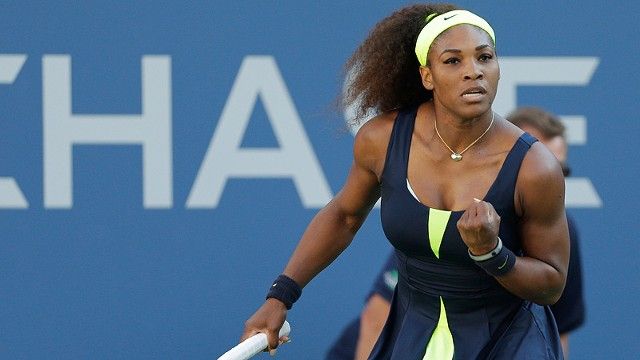
As I watched the NBA semi-finals play out, I was amused, and then horrified at the commercials for the new Wnba or – in other words – The WOMEN’S National Basketball Association. Allow me a moment to vent my view before I get to the meaty core of the horror: In the spirit of the LPGA and Women’s Tennis, basketball will now rock with segregated competition where “separate” does not yet mean or intend to be “equal.” What’s next? The Wnfl and Wmlb? C’mon! If the sexes are truly equal – then don’t segregate women into a lesser league because they “can’t compete” or aren’t allowed to play with the “big boys.” Isn’t it our responsibility as role models (and we all are in everything we do no matter what Charles Barkley tries to tell us) to show that the sexes can get along in life AND on the basketball court? I don’t buy it that women aren’t good enough to play in the “men’s league” and I don’t think they should be stuck in a lesser league of their own, either...
We Got Next!
We Got Next! is the new slogan for the Wnba that really has me reeling because it is so degrading and paternal and nasty in its disgrace of the women in the league and the English language as well...
We Got Next! is not proper English. What is the Wnba trying to say about itself by employing that slogan? Are they trying to say that the women players and the league itself are uneducated? Is this a stab at bringing some Black female players to the masses via an Ebonics-like sloganism? Are we to think the Wnba represents some sort of “street ball” instead of the Pro game we’re used to watching with the men in the NBA?
--
`We got next' says it all as WNBA gets ready to debut
Or "we got next." It's the
three-word ticket to play in street-corner basketball. At long last,
it's now the women's turn to say it - and to play it. Hang around a busy
pickup court, and you'll understand the term soon enough. For those who
don't know their asphalt from an arena, it means, "Please, may we play
the next game when you are through?" But who has time to deal with all
those words?
"We got next' is a male
thing, a pickup line for the next game," says Mary Murphy, head coach of
the Sacramento Monarchs of the Women's National Basketball Association.
Now, the expression has
moved from the street game to the marketing arena as the slam-dunk
slogan for the WNBA, the NBA's new sister league.
"It says 'We're here." ' I
love the slogan. It's getting the word out," Murphy says. The slogan
started showing up in print ads and on TV a few months ago.
"We got next" is the
perfect setup.
The slogan has literalism
going for it: Now that the NBA is finished, the WNBA's inaugural season
starts Saturday and runs through Aug. 30.
The slogan also has
symbolism going for it - with a larger message of "it's our turn at
last" for the very notion of women's professional basketball. For
players who have been playing for pay everywhere but the United States -
in Italy and Turkey and elsewhere - it's a sweet reminder that it's
finally their turn to play with a home-court advantage...
Like many slogans, this
one will be easily disassembled for the purposes of parody. "We got
nixed" comes to mind if the league fails.
Don't feel bad if you
didn't get "we got next" right away. Peter Land, director of marketing
communications for WNBA, says by phone from New York that there were
even a few people in his office who didn't get it at first.
But hard-core basketball
fans will know - and Land says those are the people the WNBA is shooting
for.
"I think the creative
thing was to come up with a campaign that was a little bit fun and a lot
basketball, and like any campaign something people would remember,"
Land says.
The person who actually
came up with the winning three syllables is Amie Murstein, a 29-year-old
advertising copy writer in Manhattan. She and Brian Hughes, an art
director, were one of several writer-artist pairs who took on the
challenge when their firm, Fallon McElligott Berlin, took on the job of
coming up with a WNBA campaign last fall.
"You don't always get a
chance to create an image for something. You often come in to an
established brand image," Murstein said.
"Basically, we were given
the assignment that this new league was about to be introduced, and that
the league was all about basketball, not about gender," she says.
Murstein has never said
"we got next" at the court herself. Her sports are mountain biking, golf
and softball. But she had heard the expression plenty of times,
watching pickup games in Manhattan.
Some of the slogans
Murstein and her partner talked about included, "A new era" and "The
games will begin." The problem: "Those aren't inherently about
basketball," Murstein says.
"We got next" is.
"We got next" is.
The non-standard English
was discussed but dismissed, Murstein says: "'We got next' just sounded
right, and that's how you say it no matter who you are."
After about a month of
brainstorming, the advertising agency presented several possible
campaigns to WNBA executives in early December.
"This was the last
campaign that we presented, and they immediately loved it. They said,
'You saved the best for last,' " says Izzy DeBellis, the ad agency's
creative director. "They saw the power of the line quicker than we did."
--
Chapter 3
Key
Terms:
Unconscious
- the irrational part of the psyche unavailable to a person's
consciousness except through dissociated acts or dreams.
Freud's
model of the psyche:
- Id - completely unconscious part of the psyche that serves as a storehouse of our desires, wishes, and fears. The id houses the libido, the source of psychosexual energy.
- Ego - mostly to partially (<--a point of debate) conscious part of the psyche that processes experiences and operates as a referee or mediator between the id and superego.
- Superego - often thought of as one's "conscience"; the superego operates "like an internal censor [encouraging] moral judgments in light of social pressures" (123, Bressler - see General Resources below).
Lacan's
model of the psyche:
- Imaginary - a preverbal/verbal stage in which a child (around 6-18 months of age) begins to develop a sense of separateness from her mother as well as other people and objects; however, the child's sense of sense is still incomplete.
- Symbolic - the stage marking a child's entrance into language (the ability to understand and generate symbols); in contrast to the imaginary stage, largely focused on the mother, the symbolic stage shifts attention to the father who, in Lacanian theory, represents cultural norms, laws, language, and power (the symbol of power is the phallus--an arguably "gender-neutral" term).
- Real - an unattainable stage representing all that a person is not and does not have. Both Lacan and his critics argue whether the real order represents the period before the imaginary order when a child is completely fulfilled--without need or lack, or if the real order follows the symbolic order and represents our "perennial lack" (because we cannot return to the state of wholeness that existed before language).
Why is the Grinch so mean?
Id, Ego, or Superego?
Aggression & Guilt
Step out!
Not on test (unless you all stay, which is 100% optional)
Very strong language. Forget easily offended, this is an example of humor masking base, aggressive desires.
--
Grantland piece
What did you think of the article?
Can you name any US soccer players? Mens? Womens?
Discuss the use of the image.
Strong Serena
Discuss the "We got Next" campaign. Ever been to an NBA game? WNBA? Watch on TV?
What's the message of "We Got Next?"
article
Have women's sports truly arrived as a non-objectified athletic competition?
agency dissolved in 1997, fallon.com now a big shop (based in Minnesota).
Chapter 3
Psychoanalytic criticism
Are we rational?
valentines day article
Key Terms:
Unconscious - the irrational part of the psyche unavailable to a person's consciousness except through dissociated acts or dreams.
Freud's model of the psyche:
- Id - completely unconscious part of the psyche that serves as a storehouse of our desires, wishes, and fears. The id houses the libido, the source of psychosexual energy.
- Ego - mostly to partially (<--a point of debate) conscious part of the psyche that processes experiences and operates as a referee or mediator between the id and superego.
- Superego - often thought of as one's "conscience"; the superego operates "like an internal censor [encouraging] moral judgments in light of social pressures" (123, Bressler - see General Resources below).
- Imaginary - a preverbal/verbal stage in which a child (around 6-18 months of age) begins to develop a sense of separateness from her mother as well as other people and objects; however, the child's sense of sense is still incomplete.
- Symbolic - the stage marking a child's entrance into language (the ability to understand and generate symbols); in contrast to the imaginary stage, largely focused on the mother, the symbolic stage shifts attention to the father who, in Lacanian theory, represents cultural norms, laws, language, and power (the symbol of power is the phallus--an arguably "gender-neutral" term).
- Real - an unattainable stage representing all that a person is not and does not have. Both Lacan and his critics argue whether the real order represents the period before the imaginary order when a child is completely fulfilled--without need or lack, or if the real order follows the symbolic order and represents our "perennial lack" (because we cannot return to the state of wholeness that existed before language).
Motivation Research--discover the unconscious
libido definition
most common sex fetish? foot
Oedipus complex
Why do we empathize with heroes? their problems are our problems
Story of Oedipus on the TEST
Id Ego Superego
Id-chaotic nature, desires
Ego-Logic, rationalism
Superego-morals, holding the id in check
Star Trek--kirk, spock, bones mccoy
grinch clip
is the grinch an id, ego, or superego? (ego strong, superego weak)
depression and counseling note
aggression and guilt
humor, making your superego chill out so your id can have fun
louis ck
aggressive
heroes, winners,especially in mass media
psychoanalysis challenges you to admit non rationality and that you are not spock--you are largely driven by emotion and non-pc desires, many of which are completely unconscious
and even spock gets angry!
--
http://goinside.com/1997/06/01/wnba-we-got-next-get-some-english-first/
http://www.deseretnews.com/article/567096/We-got-next-says-it-all-as-WNBA-gets-ready-to-debut.html?pg=all
http://www.nytimes.com/1999/01/05/business/media-business-advertising-fallon-mcelligott-tries-shore-up-its-new-york.html
http://www.fallon.com/about/leadership/
http://www.thenation.com/print/article/166221/valentines-day-occupy-romantic-industrial-complex
http://www.kristisiegel.com/theory.htm#psycho

No comments:
Post a Comment